Do I have to use voice?
No. You can use voice, buttons, or a combination of both to run Klabbo. You can switch between them whenever it is easier for you.
Can Klabbo help at a restaurant I have never visited?
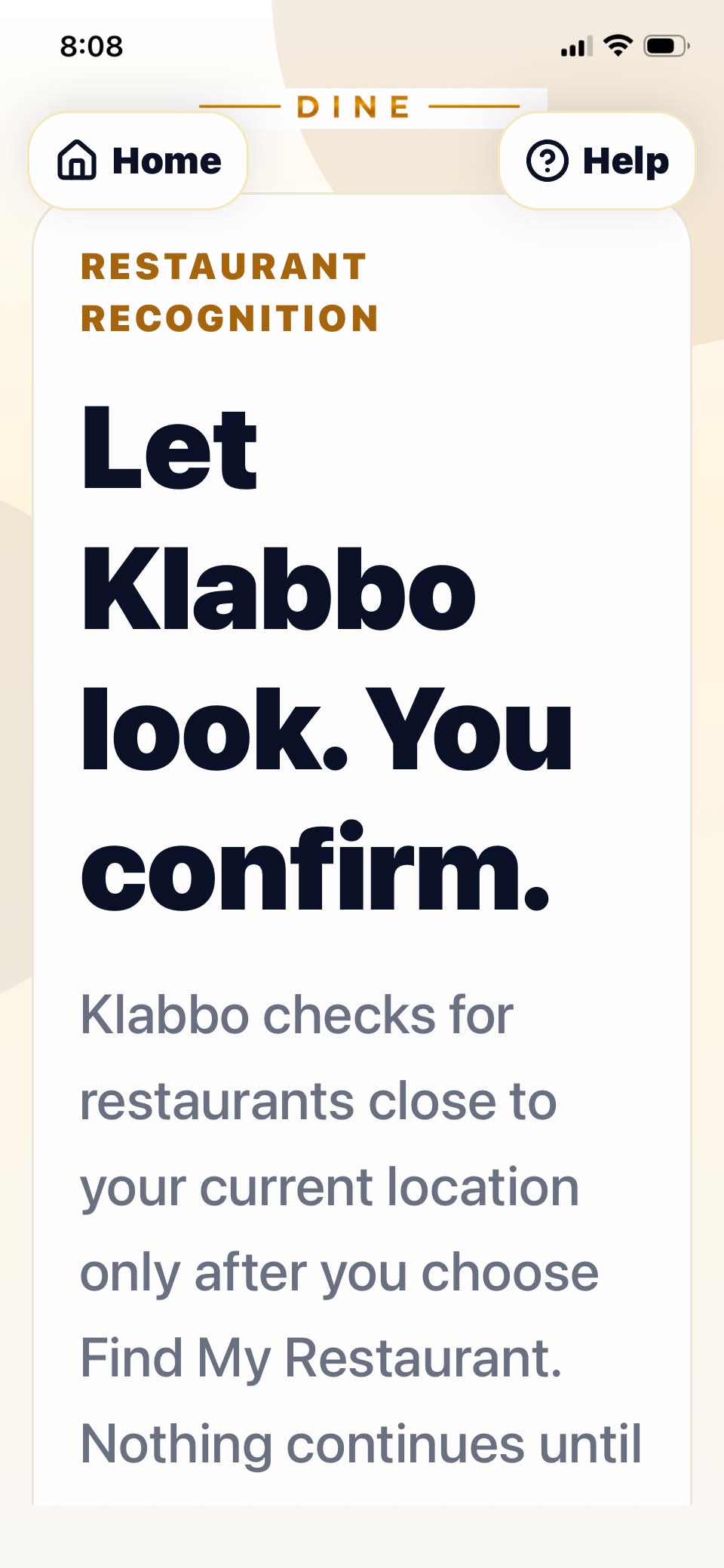
Yes. Preferences, avoidances, familiar choices, and helpful notes can be prepared ahead of time. Klabbo can also organize a restaurant menu into clearer sections for a first visit.
Does Klabbo make recommendations or decisions for me?
No. Klabbo can help narrow information and bring forward what you chose, but it does not order, diagnose, or decide for you.
What does Klabbo remember?
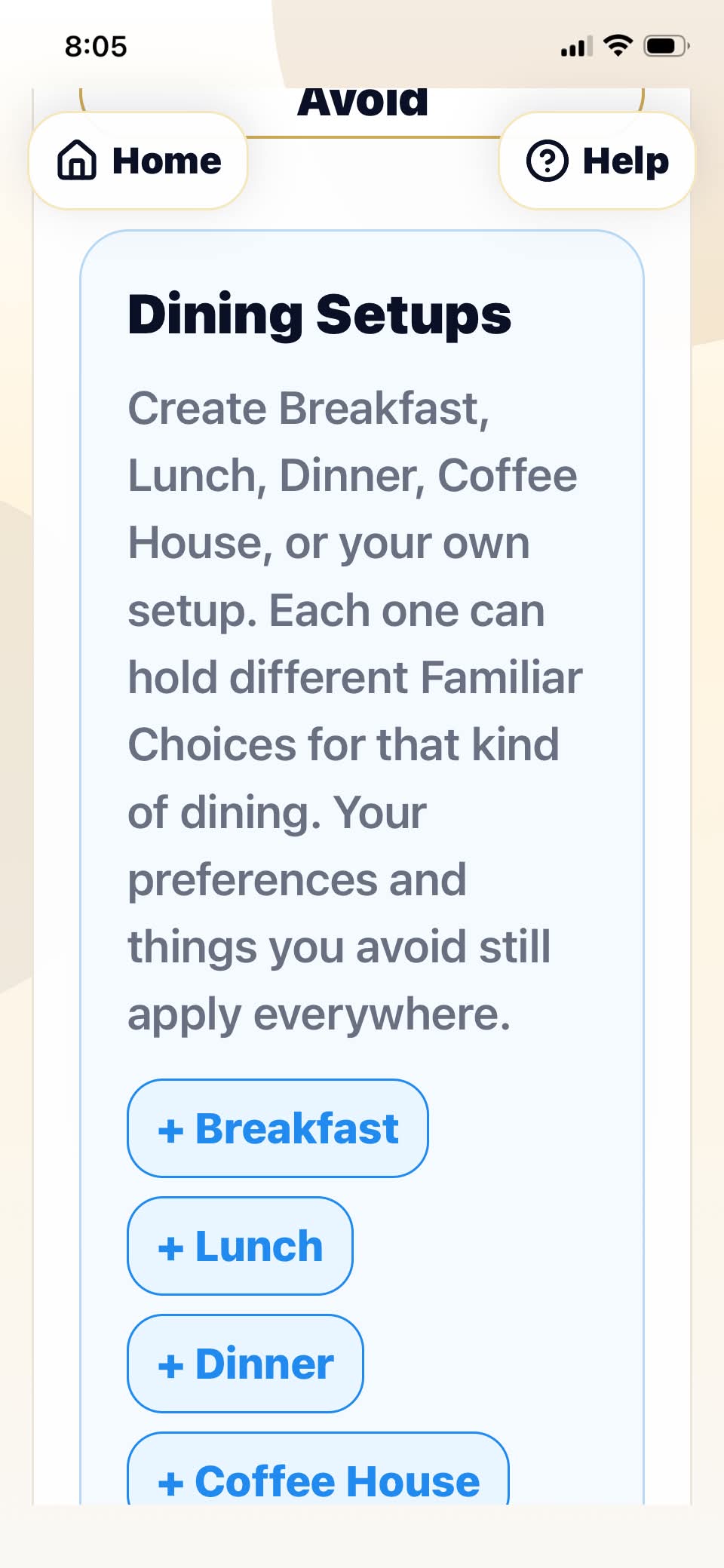
Only information you choose to save, such as dining choices, preferences, avoidances, preparation items, and notes. Klabbo asks before bringing saved information forward.
Is Klabbo only for people with accessibility needs?
No. Accessibility is central to the design, but Klabbo is for anyone who wants less searching, less pressure, better preparation, or an easier way to carry what matters into everyday experiences.
What is available in the Founding Experience Program?
Klabbo Dine and Klabbo Health are included. Groceries and other future experiences are not part of this first testing program.
Who is behind Klabbo?
Klabbo is developed and operated by Klabbo LLC, a Wisconsin company. During the private Founding Experience Program, we are keeping the public site focused on the product and the people it is being built to serve. Founder and ownership information can be shared directly with qualified investors, partners, and counsel during appropriate diligence.
Can Klabbo staff see what I save?
Klabbo is not designed around people reading your saved experiences, and we do not routinely monitor or review the content you create. Account-level access controls are used to separate user data. Like other cloud services, limited authorized technical access may still be possible when necessary for security, support, legal obligations, or service operation. We would rather state that accurately than make an absolute promise the architecture cannot support.
Does Klabbo sell my data?
No. Klabbo does not sell personal information or user-created continuity data. We also do not use that information for advertising.
Does Klabbo use my information to train AI models?
Klabbo does not use your saved experiences, preparation notes, preferences, or other user-created continuity data to train a Klabbo AI model. Some features rely on service providers to perform a specific function, such as speech or menu reading. Their processing is governed by their service terms and Klabbo configuration. See Privacy & Security for more detail.
Can I permanently delete my information?
You can delete user-created information through available Klabbo controls and may request account or personal-data deletion through support@klabboexp.com. Some limited records may need to remain temporarily in backups, security logs, or where law requires retention; those copies are not kept for ordinary product use.
Is Klabbo Health a medical service or HIPAA service?
No. Klabbo Health is a preparation and continuity experience. It does not diagnose, recommend treatment, make medical decisions, or replace a healthcare professional. HIPAA does not automatically apply to every consumer health app. Klabbo does not claim that every Klabbo Health interaction is HIPAA-covered.
Where is my information stored and protected?
Klabbo uses established cloud and infrastructure providers for authentication, storage, secure gateways, and selected product functions. Data is protected with encrypted network connections and provider encryption at rest where applicable, together with account-level access controls and server-side handling of private service credentials. We intentionally do not publish sensitive infrastructure details that would weaken security.
What happens to my data if Klabbo shuts down?
If Klabbo permanently discontinues the service, our goal is to provide reasonable notice when practical and a way to delete or retrieve user-controlled information where the product supports it. Personal information would then be deleted or de-identified when it is no longer required, subject to legal, security, and backup obligations.